
Contents
- Historical Timeline
- The Grand Senior Elder’s Mission to Taiwan
- A Brief Biography of Immortal Zhen Xiu · Lin Tingcai
Historical Timeline
1937 · Dingchou Year
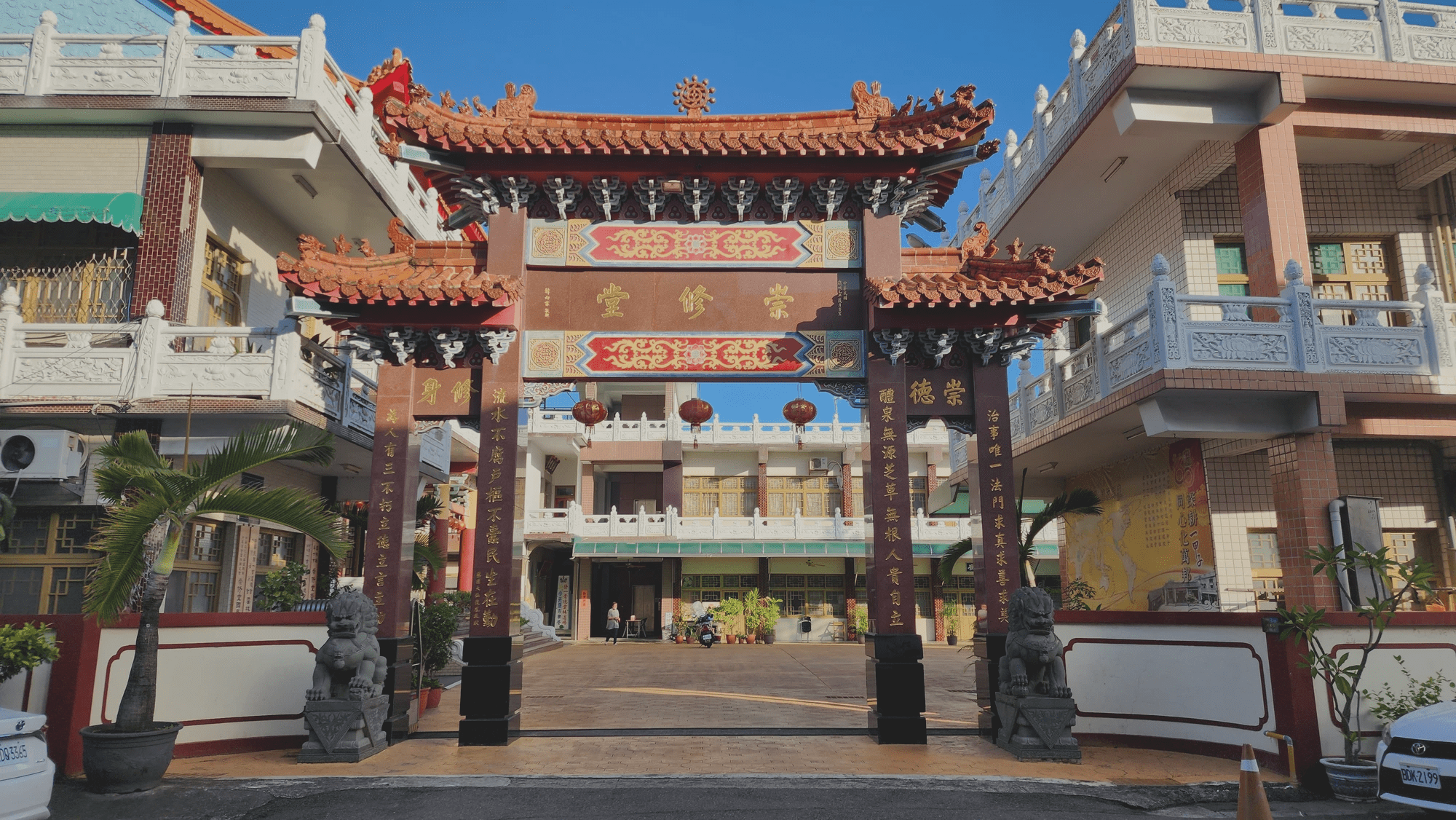
Lord Guan bestowed the name Chong Xiu Temple. Lin Youzhang, father of Lin Shuzhao, and others founded it as a spirit-writing temple.
1949 · Jichou Year
Chong Xiu Temple’s reconstruction was completed and its deities installed.
1950 · Gengyin Year
Li Qinghe introduced Lin Shuzhao to Receiving Tao.
1951 · Xinmao Year
Government investigations at Senior Elder Liu’s community in Tainan led to the discovery of the Youth Photography Studio’s address. Senior Elder Chen and other predecessors withdrew to Sanmin Road in Taichung. The Holy Temple moved from the studio to Taihe Inn. The Senior Elder travelled to Douliu by train on the first and fifteenth of each lunar month to transmit Tao and guide members.
Mrs. Chen introduced the vegetarian practitioner Peng Pucheng to Receiving Tao.
1952 · Renchen Year
Lin Shuzhao wished to turn Chong Xiu Temple into a Xiantian Holy Temple. Grand Senior Elder Han organized funds to renovate its three low buildings.
1954 · Jiawu Year
The temple’s spirit-writing practitioners belonged to different Tao lineages. Following extensive discussions, the Grand Senior Elder and Senior Elder Chen formally assumed its leadership in summer.
1955 · Yiwei Year
Chong Xiu Temple held its first selection of people for service responsibilities.
1956 · Bingshen Year
A worship pavilion was built, and study classes began.
1958 · Lunar June 15 · Wuxu Year
At the summer ceremony on lunar June 15, a second selection of people for service responsibilities took place.
1958 · Lunar September 20 · Wuxu Year
The first Ming-De Xin-Min Cultivation Class (Tao Seminar) was held.
1960 · Lunar October 15 · Gengzi Year
The chronicle records a manifestation of karmic spirits through Qiu Jinluan.
1961 · Lunar February 16 · Xinchou Year
The Cultivation, Understanding, Practice and Realization Class began, also known as the Three Teachings Classics Class.
1961 · Lunar February 20 · Xinchou Year
The second Ming-De Xin-Min Cultivation Class (Tao Seminar) was held.
1961 · Xinchou Year
The first evening class for practising public speaking was established.
1961 · Lunar April 8 · Xinchou Year
A three-day Repentance Class had 99 participants. Masters Lai and Liu were the final two participants.
1961 · Lunar June 15 · Xinchou Year
A ceremony marked the beginning of the lecture hall project.
1961 · August · Xinchou Year
The Senior Elder fell seriously ill in Taipei, suffering seven episodes of gastric bleeding. After more than a month in hospital, the Senior Elder recovered; Tao affairs subsequently grew rapidly.
1961 · Lunar September 15 · Xinchou Year
Ground was broken for the lecture hall.
1961 · Lunar November 15 · Xinchou Year
The chronicle recounts a manifestation of the Heavenly Examiner, who took Miss He Shusi on a journey to Heaven.
1962 · Lunar April 5 · Renyin Year
The third Ming-De Xin-Min Cultivation Class was held, with a recorded manifestation involving the cries of aggrieved spirits.
1962 · Lunar April 8 · Renyin Year
A Repentance Class reunion took place in the unfinished lecture hall.
1962 · May · Renyin Year
A third selection appointed Temple Hosts, Lecturers, deputy Temple Hosts and others: 171 men and women in total.
1962 · Lunar June 15 · Renyin Year
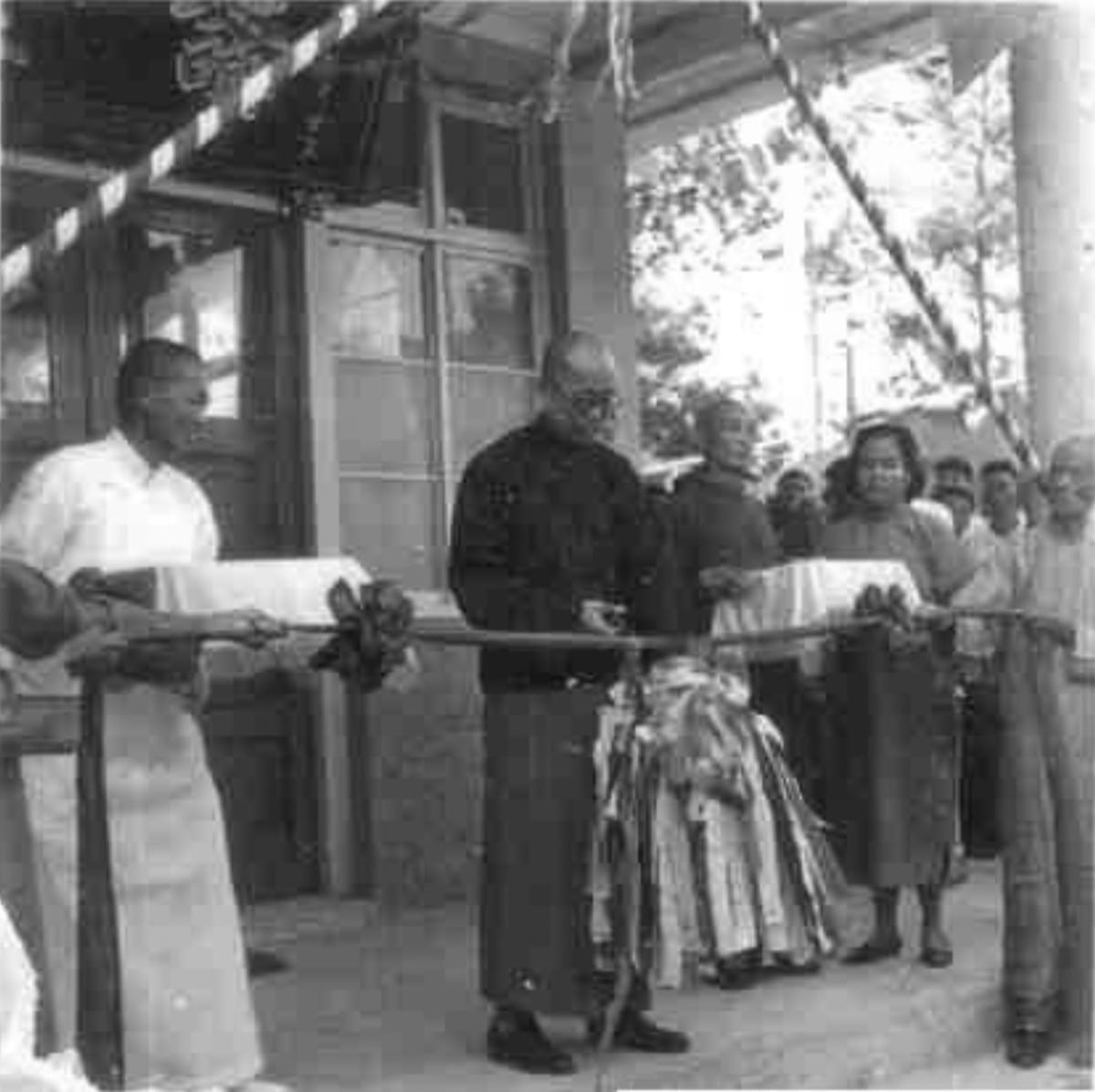
The lecture hall was inaugurated, in what is now the ground floor of Maitreya Hall.
1962 · Lunar September 15 · Renyin Year
Maitreya Buddha was welcomed, marking the completion of Chong Xiu Temple’s Maitreya Hall.
1963 · January · Guimao Year
An island-wide government crackdown—the first major trial—brought an order to seal Chong Xiu Temple. The chronicle attributes the resolution to the Matriarch’s ten thousand kowtows.
1964 · Lunar March 15 · Jiachen Year
Vows of steadfast discipleship were made. The chronicle also records Immortal Dehua’s guidance in a dream, inviting Senior Elder Chen to Kaohsiung, where communities likewise made these vows.
1966 · Lunar January 19 · Bingwu Year
During a second major trial, Yang Qingxing, Lin Junhong, Liu Jingxiu, Zhang Sheng’an and five other students appeared in court.
1967 · Lunar August 3 · Dingwei Year
The temple celebrated its thirtieth anniversary during a third major trial.
1973 · Lunar January 7 · Guichou Year
During a government investigation, Qiu Dayan disguised himself as a member of the public and photographed Chong Xiu Temple to gather evidence.
The Grand Senior Elder’s Mission to Taiwan
Life and Work
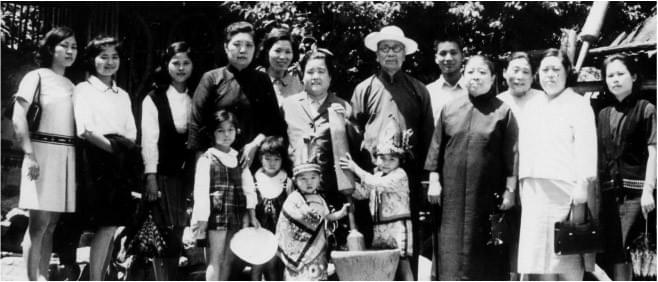
The Grand Senior Elder, Han Enrong, had the courtesy name Jieqing and the names Yulin and Jieqing; in later life he called himself the Elder of White Water. Born in 1901, he was deeply filial. He began school at eight and studied the Four Books and Five Classics thoroughly. Thoughtful in relationships and conscientious at work, he became general manager and factory director of the Da De Long textile mill at twenty-six. His mother died when he was thirty. Profound grief and heavy work were followed by advanced pulmonary illness at thirty-seven. According to this account, after physicians could offer no remedy, he recovered through the compassion of Saints and Buddhas. He then resolved to devote himself wholly to Tao cultivation and service, following the Patriarch at Chonghua Temple in Tianjin.
In 1942, his family established Tongxing Altar above the Tongxing woollen mill. Senior Elder Chen cultivated and served there.
In 1947, he originally planned to pioneer Tao propagation in Xi’an. When he sought leave from the Matriarch, she advised: “You are very well known. With the uncertain changes ahead, it would be better to go somewhere far away.” She bestowed the name Encheng upon him.
The Grand Senior Elder began preparations for Tao propagation in Taiwan:
In April 1947, the first group travelled to Taiwan: Liu Zhenkui, Hao Jinying, Master Liu Quanxiang, Master Wang Lianyu, Li Yuming, Zhang Yutai, Liu Yanbin (Liu Zhenkui’s son), Cao Haiying (Zhang Yutai’s son), Li Dexi and Niu Xuejian.
In July 1947, Wang Lianyu, Wang Jixuan, Chen Hongzhen and Zhao Jieming arrived in the second group.
In August 1947, Patriarch Zhang Tianran passed away in Chengdu, Sichuan. Some predecessors returned from Taiwan to Tianjin.
On lunar July 8, 1948, Grand Senior Elder Han arrived in Taiwan with Liu Zhenkui, Zhang Wenyun, Wang Juting, Yu Junde, Li Xintong, Han Wannian and Zhao Zhicheng.
On lunar August 7, 1948, Grand Senior Elder Hu selected Qi Yuyong, Chen Yaoju, Liang Huachun, Chen Hongzhen and Zhao Jieming to travel to Taiwan aboard the Meixin.
In June 1949, Li Qinghe invited the Grand Senior Elder, Senior Elder Chen and others to Douliu to transmit Tao. He was asked to purchase the Youth Photography Studio, where Xinghua Altar was established. Senior Elders Chen and Hao were assigned to remain in Douliu and continue the work.
Film: The Senior Elder Reflects on Moving from a Large City to a Small Town to Serve Tao
A Brief Biography of Immortal Zhen Xiu · Lin Tingcai
Life and Work
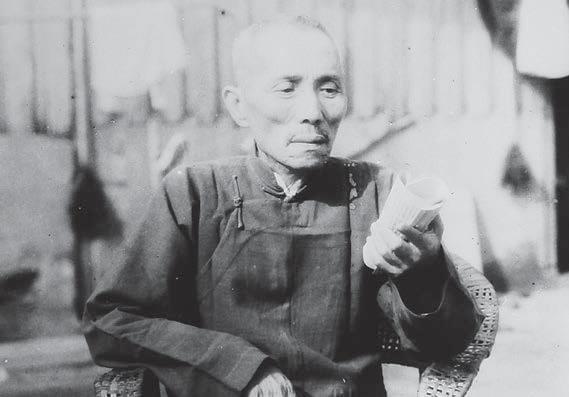
Immortal Zhen Xiu was born Lin Tingcai, also known as Yuguang and, officially, Bojiang, in Shuzijiao, Citong Township, Yunlin. His birthday was lunar September 3 in 1890. His father and grandfather were respected local figures with deep knowledge of Chinese culture, whose character influenced him from childhood. After he graduated from an agricultural college, the Qing dynasty was nearing its end. His father and grandfather secretly joined revolutionary organizations against a corrupt court. Both died before achieving their aims, and the family’s property was confiscated. These ordeals strengthened his resolve to follow their ideals and serve his country.
After the September 18 Incident, as Japanese aggression intensified, he worked secretly in intelligence for the central government, contributing to the resistance. Following victory in 1945 and Taiwan’s return to Chinese administration, he sent his son and daughter-in-law ahead to Southeast Asia, intending to join them. Their vessel struck a mine and sank, with no survivors. While grieving, he was ordered back to Taiwan for intelligence duties. He returned with his wife and two granddaughters, Yihui and Guiyuan, taking charge of intelligence work across seven central counties and cities. Holding the rank of general, he occupied a position of considerable authority and respect.
In 1947–48, amid unrest on the mainland, the Matriarch instructed Grand Senior Elder Han to pioneer Tao propagation in Taiwan. Intelligence officials already knew his name and monitored his movements from Taipei southward. Following the government’s relocation to Taiwan in 1949, public gatherings came under strict scrutiny. Li Qinghe accompanied the Grand Senior Elder, Senior Elder Hao Jinde, Elder Zhao, Elder Chen and Master Han Wannian to Douliu in May 1949. Lin was ordered to investigate possible illegal gatherings and subversion by I-Kuan Tao and intended to arrest its leader himself. In Douliu he met his old acquaintance Li Qinghe, who spoke first about national affairs and then Receiving Tao. Learning that the transmitter’s name was Han Encheng—changed at the Matriarch’s instruction—Lin thought it differed by only one character from the name he sought, and pretended to accept an invitation.
He arrived at the Youth Photography Studio, where the Heavenly Mother’s altar had been prepared and spirit-writing was taking place. As he stepped inside, he heard his name, Lin Tingcai. Initially suspecting a deception arranged by Li Qinghe, he was startled when the writing described why he had come, his mainland service and the deaths of his son and daughter-in-law. According to the account, this experience led him to Receive Tao at Xinghua Holy Temple. Listening to the Grand Senior Elder explain Tao’s universal propagation, the inner teachings of the Three Religions, the true meaning of life and the changing times, he felt profound joy and resolved to devote himself to sincere cultivation and service.
After Receiving Tao, he wholeheartedly protected its propagation and brought his wife Huang Mei—later honoured as Immortal Mother Xianning—and his granddaughters to Receive Tao. When the government planned widespread arrests of I-Kuan Tao members, he submitted a personal military guarantee to political warfare chief Chiang Ching-kuo, pledging his life for the Grand Senior Elder and the predecessors. He then resigned his position. The account credits his determination with easing official suspicions and helping Tao Seniors continue their work.
In 1950, the Grand Senior Elder took him to Chiayi to transmit Tao. Beside the Central Theatre on Guangcai Street, he rented a home of only five or six ping. Family quarters, Holy Temple, kitchen, bedroom and sitting room shared that small space. Tao Seniors were moved by the hardship, but he accepted it gladly. He invited the Grand Senior Elder to install the Heavenly Mother’s altar. Ji-Gong Living Buddha bestowed the name Dehua Altar. That day he received the Heavenly Mandate, becoming one of the first two Masters commissioned in Taiwan.
He devoted himself to Tao, setting aside worldly business. Years of helping others often left him short of money, yet his perseverance and affection for Tao Juniors never diminished. He welcomed visiting Tao members sincerely, guided them and always tried to provide meals.
After Master Weng Shuisheng, later honoured as Lord Zhengxiu, Received Tao, he saw Lin’s poverty and assumed the Merit Fees supported his household. Believing Tao valuable, he introduced more people in the hope of improving Lin’s circumstances. Yet the more people Lin guided, the poorer he became. During a visit to the Grand Senior Elder, Weng saw Lin hand over every Merit Fee, realizing he had kept none for himself. Offerings and meals came from Lin’s own resources. Weng began organizing support, but Lin declined, saying: “In serving Tao we must keep our integrity. How could we casually ask others for things?” Tao Juniors later brought food secretly through the back door to Mrs. Lin’s kitchen.
His household’s shortages remained unknown until visitors arrived at mealtime. As he continued explaining Tao, he urged his wife to cook, then asked why she remained still. Quietly, she explained that there was no rice, vegetables or oil. He asked her to borrow food or money from neighbours to welcome their guests. Only later did a neighbour reveal what had happened. His commitment remained unchanged. Learning of the difficulties, the Grand Senior Elder provided assistance on several occasions, as did a number of sincere Tao Seniors, helping the family through repeated hardship.
The Grand Senior Elder said: “When you sacrifice for Tao, Tao saves you; therefore be grateful for Heaven’s grace and the Masters’ virtue.” The source connects this with Ji-Gong Living Buddha’s teaching that those who serve attain realization. Lin’s example of following the Heavenly Mandate is offered for later generations to emulate.
April Update
Stay tuned for monthly updates.
Coming Soon
The First Large Temple
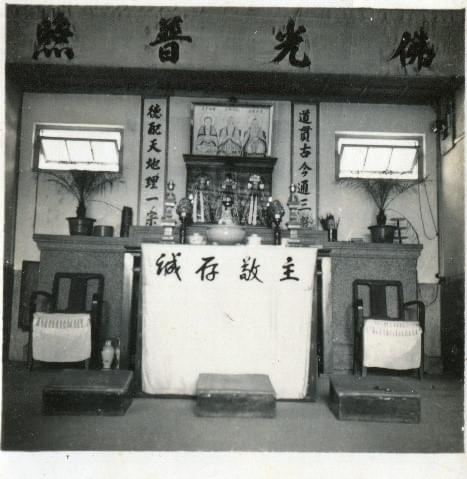
Early Chong Xiu Temple was dedicated to civil and martial sages, the sages of the Three Teachings, Lord Guan and other benefactors. Known locally as a luantang, or spirit-writing temple, it offered customary rituals to calm fright and dispel harmful influences. On designated days, Saints and Buddhas were believed to teach through several spirit-writing mediums. In 1945, Lin Shuzhao took over his father’s work, leading the mediums in continuing the temple’s religious service.
In 1950, Li Qinghe brought Lin Shuzhao to Receive Tao at the Youth Photography Studio. As it was late and the Grand Senior Elder had to return to Taichung, Masters Lin Tingcai and Lin Qiuyu cast divination blocks before Ming Ming Shang Di to determine who should transmit Tao. Lin Tingcai performed the transmission, while Lin Qiuyu served as Introducer and Guarantor.
After Receiving Tao and understanding its value, Lin Shuzhao invited Senior Elder Chen and the Grand Senior Elder to use Chong Xiu Temple for Tao affairs. As the Youth Photography Studio had not yet encountered official restrictions, the invitation was not immediately pursued.
Other spirit-writing practitioners had also Received Tao through different lineages, whose Tao Seniors consequently came to transmit Tao there.
When government pressure forced the Holy Temple to move from the Youth Photography Studio to Taihe Inn, everyone became even more committed. Increasing numbers of visitors began affecting the inn’s business. The Senior Elder felt concerned and looked for another venue, recalling Lin Shuzhao’s invitation and sending Mrs. Chen of Taihe Inn to find Chong Xiu Temple.
Respecting her teachers and Tao, Mrs. Chen promptly made enquiries and found the temple in Zhennan. She explained the Senior Elder’s wish to relocate Tao affairs. Lin was delighted and travelled to Taichung to invite both Elders. Several lineages were then using Chong Xiu Temple. To simplify arrangements, the mediums agreed to decide its affiliation by a vote reflecting each lineage’s membership. Fa-Yi had the largest number. The other lineages and mediums withdrew peacefully and unconditionally. The source praises their integrity: everyone honoured the agreement, without personal disputes or verbal conflict.
Encouraged by the Grand Senior Elder and Senior Elder, Chong Xiu’s spirit-writing temple added a Xiantian Holy Temple and raised funds for renovation. Completed in 1954, the transition placed Chong Xiu under their formal leadership and made it Fa-Yi’s first large temple in Taiwan.
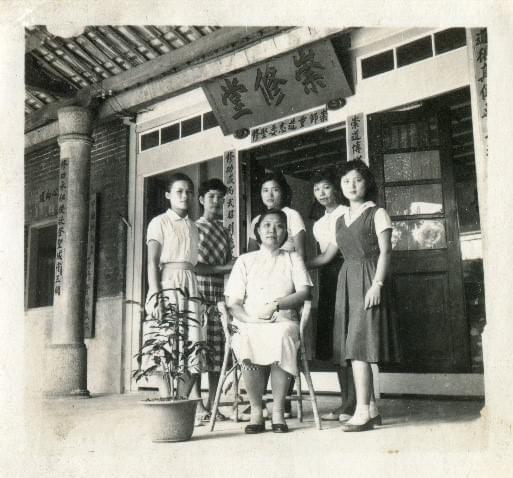
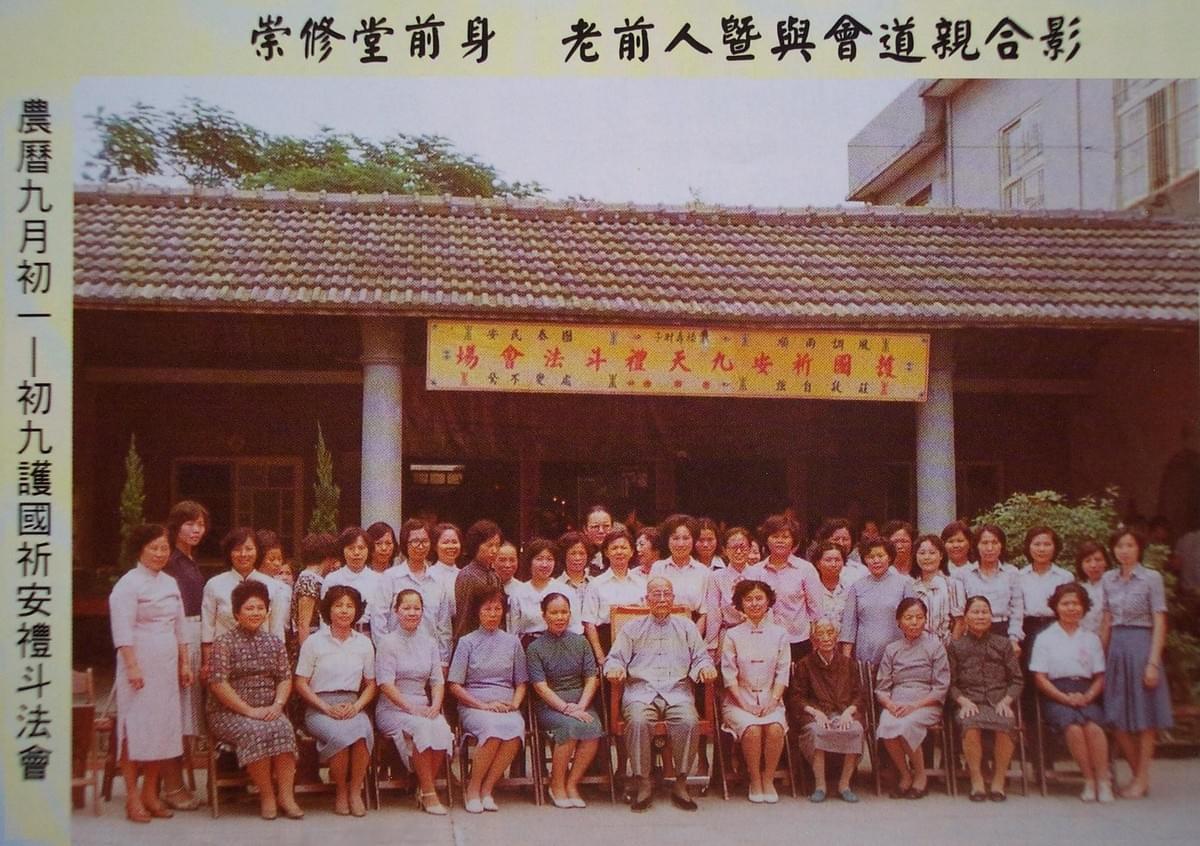
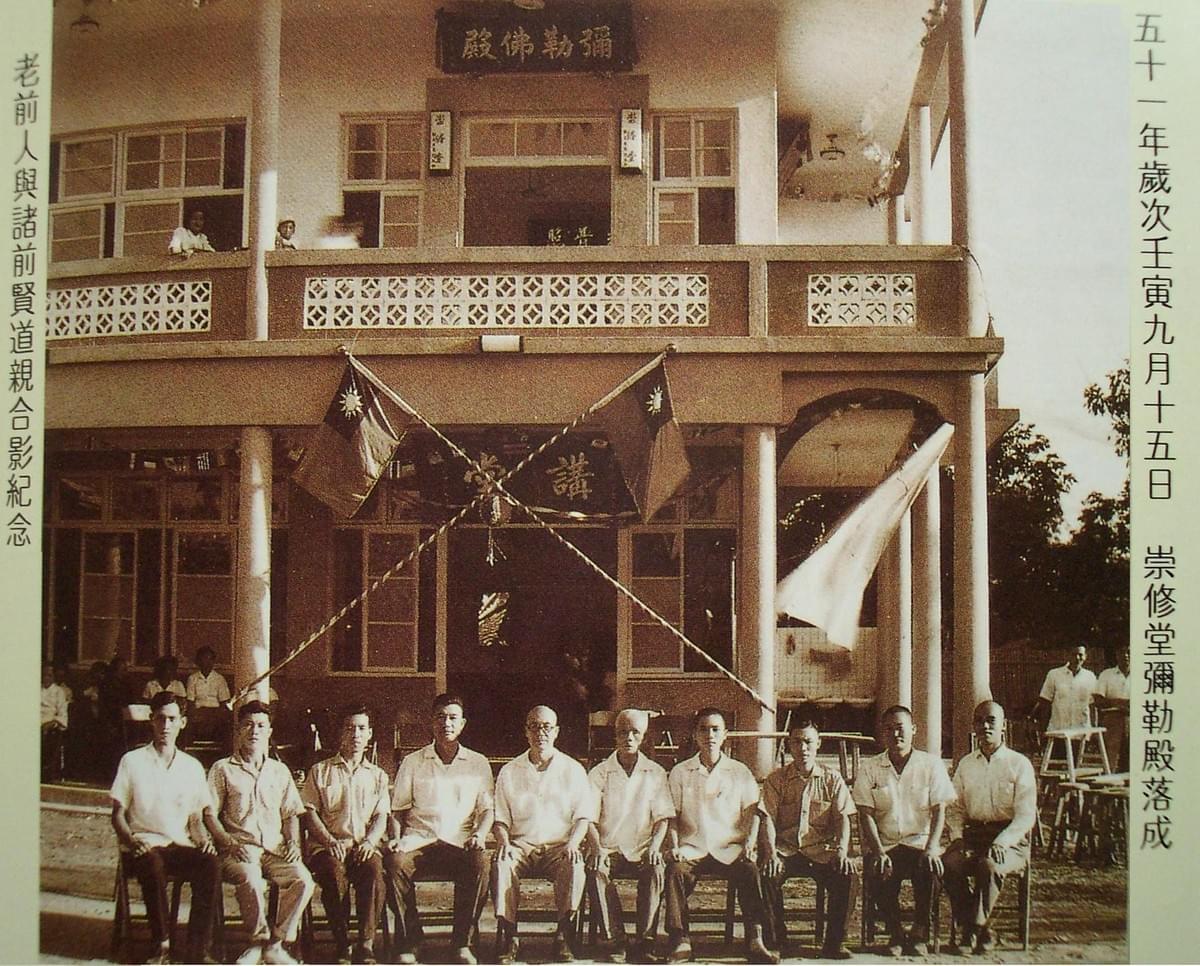
Source: Chong Xiu Temple History
Renovating Chong Xiu Temple and Adding the Worship Pavilion
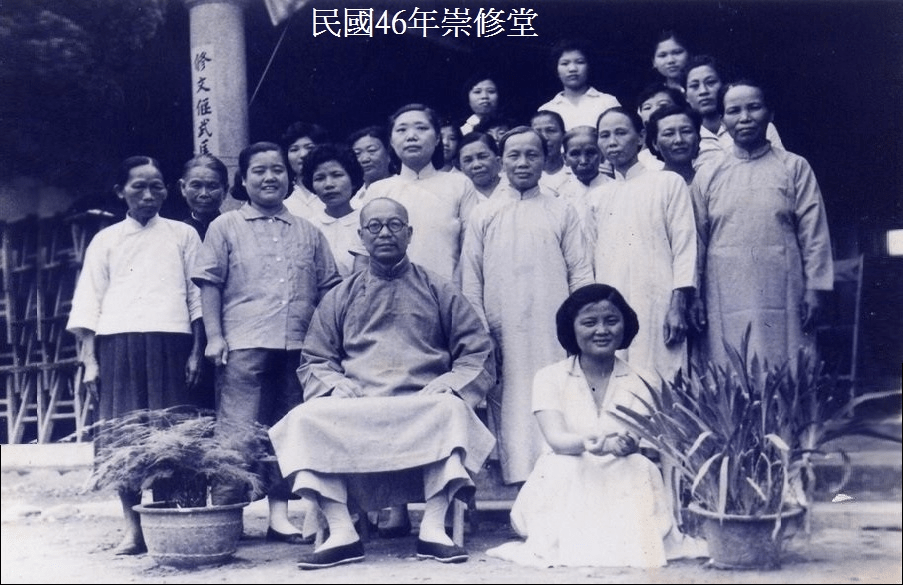
In 1954, Chong Xiu Temple completed its transition from a spirit-writing temple to a Xiantian Holy Temple under the Grand Senior Elder and Senior Elder, becoming Fa-Yi’s first large temple in Taiwan. Its premises were small, however, and the growing number of learners exceeded capacity. A worship pavilion was built in 1956. When contributions fell short, NT$5,000 was borrowed from the farmers’ association, and various classes began.
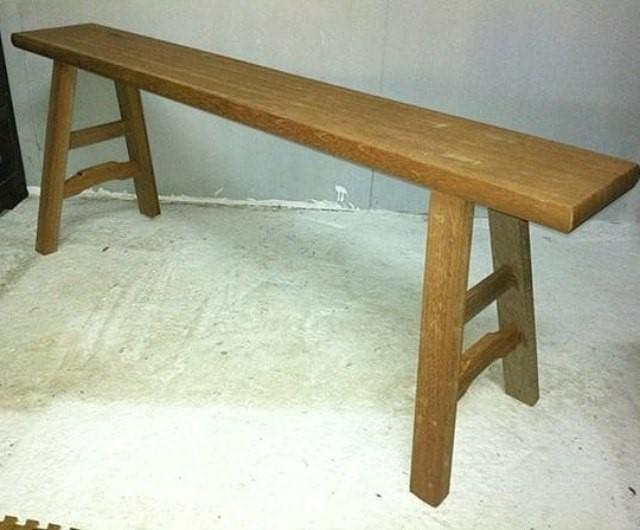
The first Ming-De Xin-Min Cultivation Class—today’s class for cultivation and realization of one’s true nature—was held on lunar September 20, 1958. In 1961 the Three Teachings Classics Class began: the Grand Senior Elder taught the Four Books, Senior Elder Liu Quanxiang the Diamond Sutra, and Senior Elder Qi Yuxiu the Tao Te Ching. These classes guided countless Tao members. With limited indoor space, lessons took place in the partly open pavilion on backless wooden benches. Long sessions were tiring, winters cold, summers hot, and heavy rain sometimes soaked participants.
Despite these conditions, the senior Masters eagerly sought Tao’s teachings, treasuring each class like rain after drought. Between classes they travelled to introduce and guide others, and Tao affairs flourished.
The account also records a manifestation involving a Japanese spirit. Hear the Senior Elder describe the events.
Film: The Senior Elder Recounts Early Spiritual Manifestations
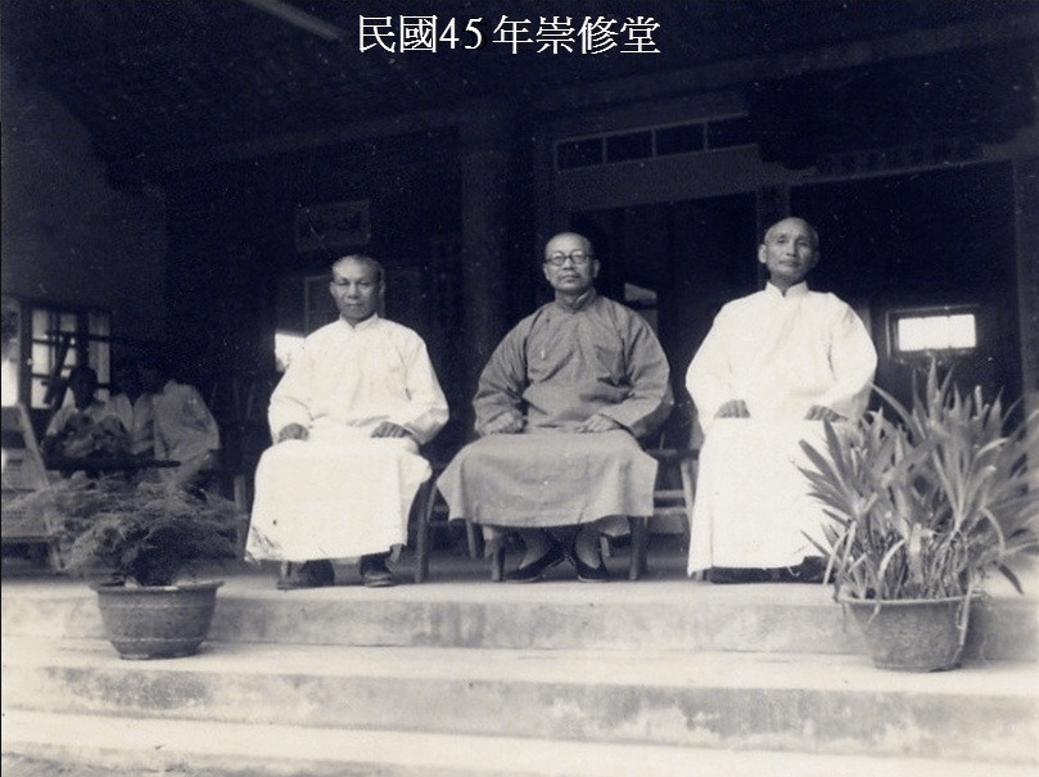
Source: Chong Xiu Temple History
Building the Maitreya Lecture Hall
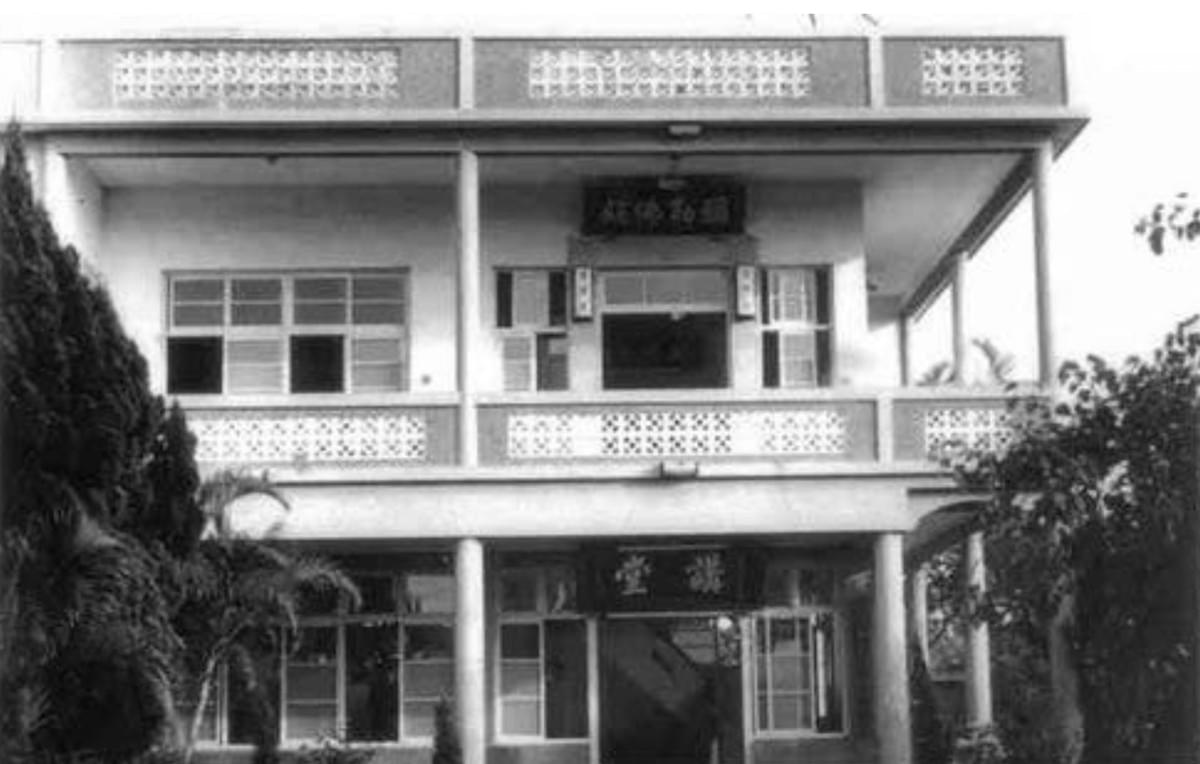
In 1960, the Heavenly Examiner was said to speak through Xu Maochuan, instructing the community to build a lecture hall beside the temple, now Maitreya Hall. Limited funds initially allowed only one floor. When approached for bricks, factory owner and Tao member Ye Bidong offered as many as needed. The Masters decided to build a second floor to give learners more space. Everyone contributed money or labour, carrying bricks and mixing cement. Though the work was exhausting, participants were filled with spiritual joy.
The source celebrates the merits of temple building, especially at Chong Xiu, Fa-Yi’s founding base, and relates that Ye Bidong’s descendants enjoyed abundant blessings.
Completed in 1962, Maitreya Hall provided a larger classroom. Although Tao activities faced restrictions, folk religious observances were permitted. The Elders therefore scheduled cultivation classes around holy birthdays and traditional ceremonies. Predecessors across Taiwan recommended participants. Classes often lasted three or four days, requiring meals and accommodation. Masters gathered firewood, vegetables, rice and offerings from those able to help. At night, sincere Tao members welcomed participants into their homes. Many Fa-Yi members still recall their cherished experiences of study and service at Chong Xiu.
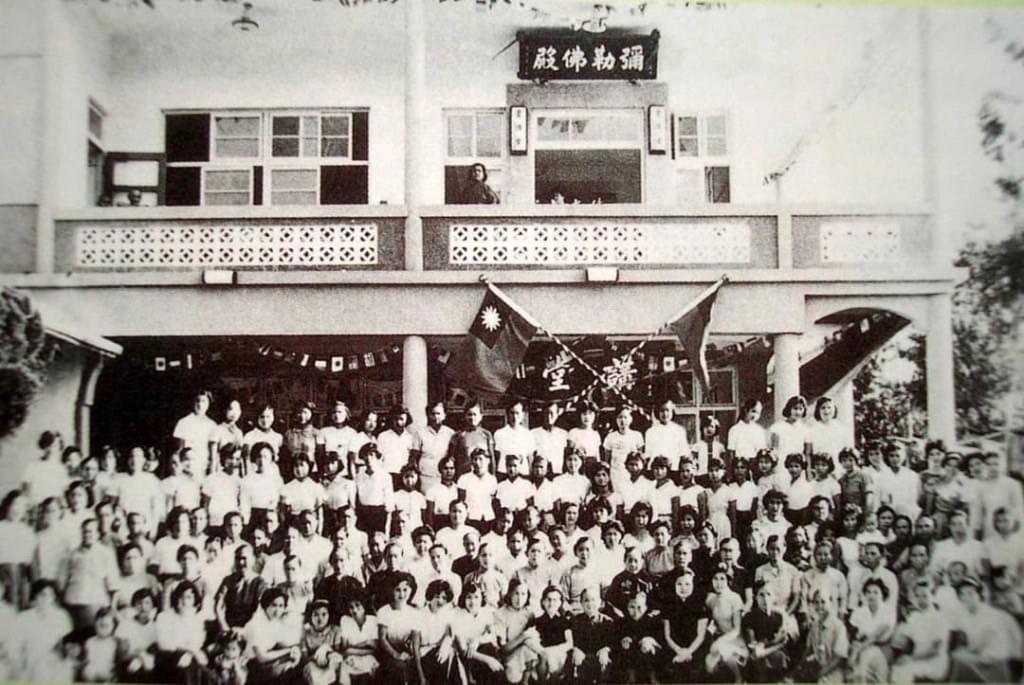
Source: Chong Xiu Temple History
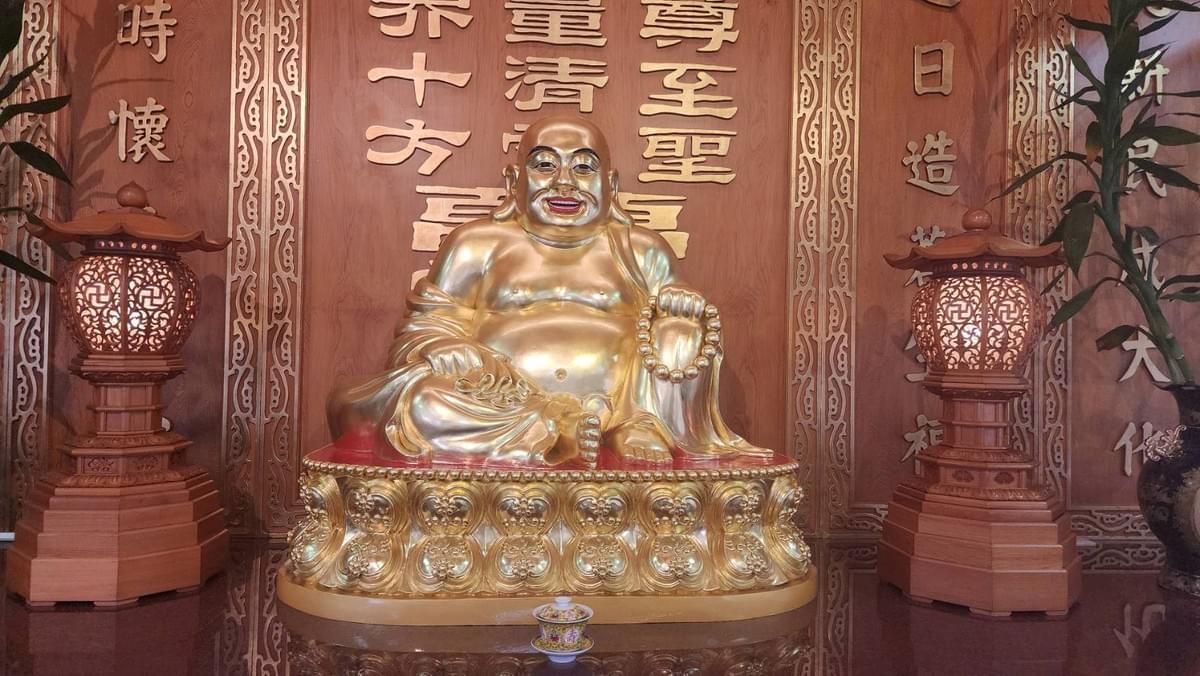
Maitreya Buddha of Maitreya Hall
Maitreya Hall was inaugurated on lunar September 15, 1962. Maitreya Buddha’s statue was commissioned from Lushanxuan in Taipei using a hollow-core moulding technique. It travelled to Douliu by train on an auspicious day. The source describes the Heavenly Examiner appearing through a medium, holding an incense burner and leading Tao members and musicians to welcome the statue from the station to Chong Xiu Temple. Participation was unprecedented.
Despite official restrictions on Tao, folk religion remained permitted. The temple organized the procession as a traditional welcoming of a deity. Crowds filled the streets, and shopkeepers set out incense tables along the route. It became a major Douliu event.
The wife of the chairman of East Asia Lighting, longing for a grandchild, vowed to sponsor Maitreya Buddha’s statue. She paid its full cost. The source recounts that a grandson was born soon after its completion and presents this as an example of the merits of temple building and sacred image making.
Note: Hollow-core image making begins with a clay model. Layers of gauze mixed with lacquer-tree sap and glutinous-rice paste are applied over it. After drying, the inner clay is removed and the finished figure painted.
Source: Chong Xiu Temple History
Growth after the Repentance Class
From 1959, holy mediums who had arrived from the mainland gradually retired. The source recounts Saints and Buddhas speaking through local participant Xu Maochuan in Taiwanese and instructing the community to hold a Repentance Class in 1960. The Grand Senior Elder presided, assisted by Senior Elders Chen and Liu. Ninety-nine participated, with Masters Lai and Liu the final two. The account describes historical penitential practices using a door panel, wooden board and chime mallet, selected by participants with a stated number of strokes, and carried out by Lin Yaoqing under the Heavenly Examiner’s supervision. Two participants later complained privately about the severity and doubted the manifestation. Back in the temple, another manifestation through Lin reportedly convinced them when they could not restrain his movements. The account draws a lesson about vigilance even when alone, citing the saying that Heaven hears whispered words like thunder and sees into dark rooms, along with the Maitreya Sutra and the Doctrine of the Mean. It urges practitioners to examine their thoughts and actions carefully, as if ten eyes watched and ten hands pointed.
The manifestations recorded during the Repentance Class inspired participants to make vows and spread Tao in their communities. The class became an important milestone in Tao affairs.
Source: Chong Xiu Temple History
The Life of Immortal Cide
Immortal Cide, Master Zhan Qian, was born in 1904 in Anxi, Fujian. At three she came to Taiwan with adoptive parents and was raised as the future wife of Chen Li. The family lived in Daxi, Taoyuan. Chen later went alone to Douliu to open Taihe Inn, while she cared dutifully for his parents. During the Japanese colonial period, business was difficult; her mother-in-law, unwilling to see the couple separated, sent her to help him. In Douliu she managed the household and frequently joined vegetarian practitioners at Zhenyi Temple to chant sutras and pray for her husband, children and family. She eventually adopted a lifelong vegetarian diet—a demanding choice in an age of material hardship. The source sees in this her deep spiritual affinity and desire to purify body and mind, recognizing worldly wealth as transient and seeking liberation from suffering.
In August 1948, the Grand Senior Elder and companions came to Taiwan under the Matriarch’s instructions. In the aftermath of the February 28 Incident, distrust of mainland arrivals and the tense political situation made propagation difficult. Li Qinghe, originally from Douliu, Received Tao in Taipei and helped interpret Mandarin for the Elders. He invited Grand Senior Elder Han south and helped find premises. In June 1949, the Youth Photography Studio near Douliu Station became available. The Grand Senior Elder sold a Taipei property for thirteen taels of gold; buying the studio cost more than NT$500, equivalent to over five taels, with repairs costing another five. Xinghua Holy Temple was established there. The predecessors rose before dawn to grind beans, make soy milk and tofu, earning their living before seeking people to introduce to Tao. After little success in the market, they looked for vegetarians and were directed to the virtuous Mrs. Chen of Taihe Inn. She Received Tao at the studio in 1949 and became a Master in 1957. A passage in the source quoting the Grand Senior Elder’s oral account of the introduction is explicitly marked as requiring verification.
Receiving Tao seemed to awaken Mrs. Chen’s original vow. She enthusiastically brought people to the studio and helped with all Tao affairs. The account particularly marvels that although she neither spoke Mandarin nor read, she could interpret the Senior Elder’s Beijing-accented speech into Taiwanese, becoming a bridge between local people and the predecessors.
As the work began to grow, government scrutiny intensified. Following trouble at Senior Elder Liu Quanxiang’s community in autumn 1949 and official attention to roadside preaching, activities at the studio had to cease in 1951 [1]. Mrs. Chen offered her own hall behind Taihe Inn so that Tao affairs could continue in Douliu. The furnishings moved into a space of only five or six ping, accommodating little more than ten people, yet preserving the foundation of Yunlin’s future community. The Senior Elder took responsibility for Douliu, with Mrs. Chen interpreting. On the first and fifteenth of the lunar month, Mrs. Chen, Aunt Qingbiao, Aunt Lin Xiulian, Chen Qin and the vegetarian practitioner worked energetically to invite others to Receive Tao.
[1] Master Ge Wenya’s biography states that he Received Tao at the Youth Photography Studio in 1951, indicating the studio was still operating that year.
Through her earlier worship and chanting at Zhenyi Temple, Mrs. Chen knew many vegetarian practitioners and introduced them to Tao. Dengji Gu, Peng Pucheng, was especially reluctant, feeling that Receiving Tao might betray the temple that had helped her in hardship. Mrs. Chen persisted compassionately. One day in 1951, she met Peng selling vegetarian ingredients in the market and said, “Congratulations! You are going to Receive Tao and worship the Buddha!” Astonished, Peng replied that Guanyin must have sent her to lead the way.
The source recounts that Peng had dreamed of Guanyin on three successive nights, being shown Senior Elder Chen and told to seek Tao transmission from her. She searched carefully, declining any transmitter who was male because the person in her dream was a woman. The night before meeting Mrs. Chen, another dream told her someone would guide her the following day. At Taihe Inn, recognizing the Senior Elder from her dreams, she embraced her in tears and begged her to stay and transmit Tao. A subsequent dream directed her to assist the Senior Elder. Throughout her life, Peng introduced many people and became a key helper in the early work.
After Xinghua Holy Temple moved to Taihe Inn, Master Zhan and other Tao Seniors helped the community grow. Increasing numbers of seekers and staff passed through the inn’s lobby, affecting business. Chen Li, the inn’s owner, did not yet understand Tao’s value, making access more difficult.
Around 1952, the Senior Elder recalled Lin Shuzhao’s invitation after Receiving Tao in 1950 to use Chong Xiu Temple. Remembering only that it was somewhere in Zhennan, the Senior Elder asked Master Zhan to find it.
Master Zhan promptly located the temple and conveyed the request. Lin Shuzhao welcomed it warmly and travelled to Taichung to invite both Elders personally. Tao affairs gradually moved from Taihe Inn to Chong Xiu. The Grand Senior Elder helped fund its conversion to a Xiantian Holy Temple, completed in 1954, making it the first large temple established after I-Kuan Tao’s arrival in Taiwan.
Severe inflation and the 1949 currency reform, exchanging NT$40,000 in old currency for NT$1 new, greatly reduced the pioneers’ resources. They lived frugally to continue their work. As activities moved to the ageing Chong Xiu Temple, Master Zhan secretly brought rice and vegetables for the visiting Senior Elder. Her husband objected, partly because police frequently checked the inn and warned him she had been deceived by a religious group. Despite opposition, she remained committed, often taking her grandson out as a reason to visit the temple. When she needed to go elsewhere to guide people, she left him sleeping there until her return. She regarded his peaceful cooperation as the compassion of Saints and Buddhas easing her difficulties.
Master Zhan treated members like a loving mother, affectionately calling them “children” in Taiwanese. She lived frugally and travelled to visit and assist those in need. When members faced difficulties or illness, she prayed earnestly for them. The account describes her bringing consecrated tea after a thousand kowtows, staying until it was taken, and members subsequently recovering. It presents her sincerity, selfless love and care as inspiring many to dedicate themselves to Tao.
Beyond Douliu, Master Zhan also served Shanzhuku in Xiaobantian, Lugu. She rose early, took a Taisi bus to Zhushan and a Changhua bus to Lugu, then walked more than five hours round trip to reach members. With vegetarian food difficult to find in the mountains, she carried dry provisions and water for herself and others.
She often arrived home after seven or eight in the evening, long after the family had eaten. To avoid troubling them, she ate cold rice with hot tea; peanuts or pickles were a luxury. As Tao affairs grew, she and her companions became ever busier.
With public gatherings restricted, the Elders used holy birthdays and traditional observances to hold classes at Chong Xiu. This account dates the first class for cultivation and realization of one’s true nature to lunar April 8, 1958, the Buddha’s birthday. Numbers were limited to avoid attention, and the Grand Senior Elder reserved places for other predecessors’ communities so that they could develop together. Accommodation was difficult, so Master Zhan offered visiting members free rooms at Taihe Inn, relieving the Elders of that concern.
On lunar November 20, 1965, Master Zhan supervised a Tao Seminar and cared for participants at Chong Xiu. Returning home that evening, she went upstairs, switched on the light and naturally said, “Teacher, you have come,” before gently collapsing and passing away. Her son-in-law Shen Shangsheng reportedly dreamed of her returning to Heaven with the Three Officials. On waking, he hurried home with his wife and found that she had died wearing the clothes seen in his dream.
After her passing, she sat upright on a lotus seat for a day and a half at the inn’s entrance. The account describes her face as lifelike and body soft. Guests, unaware she had died, suggested she go to bed or offered birthday wishes, mistaking her peaceful appearance for that of a living person.
More than a thousand Tao members attended her funeral, and over three hundred accompanied her to the hillside burial. Their grief moved even passers-by. Her husband remarked on the extraordinary number who came to honour her. In 1966, he donated the remaining NT$4,000 from funeral funds to Chong Xiu Temple for land acquisition.
Her eldest son, Chen Songmao, was deeply moved and gradually wound down his successful business to devote himself to Tao and charity. Commissioned as a Master in 1977, he served as a director of Puli’s Guangming Home and worked for many years at Tongren Home: director from 1980 to 1994 and board chair from 1994 to 1998. He became Chong Xiu’s Temple Host in 1973 and, from 1992 onward, its committee chair. Even in his nineties, he upheld his promise to the Senior Elder to serve until his final breath, carrying forward his mother’s respect for teachers and Tao.
Educated under Japanese rule and fluent in Japanese, Master Chen supported the Elders’ pioneering work in Japan. Over fifteen years he sold ten jia of land to fund travel, without regret. He translated Tao texts, including the Heavenly Mother’s Ten Admonitions to Her Children, expressing her longing with accomplished Japanese. A capable speaker, organizer and writer, he was devoted to the community. When the Yunlin College Section, founded in 1993, faced financial difficulty, he quietly offered support, exemplifying selfless service.
His devotion to his mother was equally moving. After her passing, the Heavenly Mother bestowed the title Immortal Cide in 1966. He carefully collected and organized every spiritual teaching attributed to her, treasuring them like letters from a mother far away. Reading them with gratitude and concentration, he embodied the Book of Odes’ call to remember ancestors by cultivating and continuing their virtue.
The Statue of Holy Mother Cide at Jiande Temple, Gukeng
The account presents Master Zhan’s attainment as Immortal Cide after her passing in 1965 as testimony to Tao’s promise of realization within one lifetime. It describes her continuing care for beings through spiritual guidance. From lunar September 12, 1969, she was said to teach through spirit-writing at Jiande Temple in Gukeng as Holy Mother Cide. The community learned of this when her goddaughter’s husband, working on the temple’s reconstruction, saw the written teachings during a lunch break. Further manifestations were recorded at Tiezhen Mountain in Dajia, Tao Seminars and review classes. Although she had been unable to read during life, the account describes her teaching through written words after returning to Heaven, affirming the completeness of everyone’s original nature.
Although she had attained an immortal’s position, and tradition gives seniority to those who have passed away, her respect for her teachers and Tao only deepened. The following examples are offered.
At a spiritual encounter on lunar May 6, 1970, the Senior Elder asked Immortal Cide to assist Tao affairs. She pledged wholehearted support and prayers to the Heavenly Mother for the easing of trials. At Guide Altar in Taipei on lunar November 28, 1977, before overseas pioneering work, the Senior Elder asked the immortals whether they would accompany the journey.
Immortal Cide immediately replied:
Great immortals and small alike wish to follow, offering all the help we can.
We share the Senior Elder’s honour; our work began in Taiwan.
To keep the Senior Elder standing leaves us uneasy and ashamed.
Brothers and young sisters, forgive these humble, imperfect words.
Please be understanding; we cannot bear to keep you standing too.
We wish only that your merits grow. It is already late to speak further.
You must all be hungry—it is time to eat. With gratitude, we will say no more…
These words express her deep respect for the Senior Elder. Rather than becoming proud after attainment, she offered even greater support and reverence.
Throughout her life, Master Zhan combined devoted cultivation with exemplary character. The source honours her as Taiwan’s first female Master, the first Taiwanese Tao member to attain immortality and the first whose seated passing on a lotus chair affirmed Tao’s value. Her love remained with everyone she helped. Humble despite her family’s means, patient through hardship and entirely loyal to the community and its Tao Seniors, she is remembered for devotion, filial care and virtue.
“Immortal Cide: Loyalty, Filial Devotion and Virtue” · To the Tune of Rainy Night Flower
Immortal Cide, Immortal Cide, mistress of Taihe Inn,
Unmoved by riches, kind at heart, vegetarian and devoted to Saints and Buddhas. (1)
Receiving Tao, cultivating diligently, the first female Master,
Patient through humiliation and trials, her unceasing sincerity moved Heaven and people. (2)
Loving Tao members as her children, helping the suffering and poor,
Passing peacefully, guided by Saints and Buddhas, returning to boundless joy in Heaven. (3)
Attaining immortality, unchanged in heart, appearing to encourage goodness,
Supporting the Senior Elder wherever she went, constant in loyalty, filial devotion and virtue. (4)
Source: Chong Xiu Temple History
A Brief Biography of Immortal Huici
In 1907, life in Taiwan under Japanese colonial rule was hard. In the rural town of Douliu, a girl was born to a poor farming family at noon on lunar February 18. She later became known as Immortal Huici, remembered for introducing more than five hundred people to Tao with the simple words, “Tao is good.”
Her parents were honest, hardworking and frugal, raising two sons and one daughter. Although cherished as the only girl, she willingly helped with every household task. Her father died when she was seven, leaving her mother to support the family by selling homemade rice cakes along streets and at factories. Workers recorded purchases in a notebook for monthly payment because her mother could not read. Some entered less than they owed, but her mother did not argue, teaching her daughter generosity through example.
At twenty-eight, she followed her mother in listening to visiting monks and adopting vegetarian meals. Seeing life’s hardships, she wished to cultivate spiritually. Her family nevertheless arranged a marriage in the mountains, which she firmly refused. The account describes an altar incense burner catching fire during preparations and a spirit-medium’s explanation involving three previous lives as a monk. It records a warning against the marriage and her own desperate declaration that she would take her life rather than be forced into it. Concerned for her, her mother arranged for her to leave overnight for Zhenyi Temple to enter religious life.
The Temple Host, hearing her circumstances, offered to repay the wedding-cake expense and let her stay. Grateful, she cultivated diligently, chanting, gathering and chopping firewood, carrying water and cooking. Of five women entering together, only she remained through the austere conditions, joyfully fulfilling her wish to cultivate.
She spent sixteen or seventeen quiet years at Zhenyi Temple. In 1951, according to the account, Guanyin appeared in dreams on three successive nights, showing Senior Elder Chen’s face and directing her to seek Receiving Tao and liberation from birth and death. On the third night, she was told someone would guide her the next day. While selling vegetarian ingredients, she met Master Zhan, who congratulated her on going to Receive Tao.
She exclaimed that Guanyin must have sent Master Zhan. At Taihe Inn, recognizing the Senior Elder from her dreams, she knelt and embraced her feet, imploring her to transmit Tao and allow her to help introduce and guide others. She then recounted the dreams in full.
Thereafter she travelled on foot selling vegetarian ingredients and introducing people to Tao, tirelessly visiting nearby towns and villages, including other vegetarian practitioners at her temple. Although she could explain little beyond “Tao is good,” her sincerity moved many. A new Temple Host disapproved and sometimes locked the gate while she was out, forcing her to climb the wall on returning. Still she attended Wednesday study classes and continued serving others. The Senior Elder offered to arrange a home for her at a Taichung Holy Temple, but she declined out of gratitude to Zhenyi, which had sheltered her in need. She remained there until her death, and the temple handled her funeral.
The Senior Elder, saddened by the modest arrangements for someone who had endured so much in service, held another memorial at Chong Xiu Temple. Members from surrounding towns came eagerly to help and remember her. Recalling her teachings and difficult life, many wept deeply.
The meeting of this sincere practitioner and the devoted Senior Elder became a treasured story from Tao’s early propagation. The account offers their lives as testimony to the significance of Receiving Tao, cultivation and service in seeking liberation from birth and death.
Source: Chong Xiu Temple History
Enlightening Guidance from Saints and Buddhas · Part One
The source teaches that entering Tao cultivation and service reflects deep spiritual affinity, while karmic obstacles can make commitment difficult. The Grand Senior Elder therefore held Repentance Classes to offer opportunities for repentance. Alongside lessons, he arranged checkpoints modelled on the Three Passes and Nine Gates to deepen participants’ appreciation of the Three Treasures.
Master Liu Jingxiu checked each participant’s recollection of the Three Treasures in the Holy Temple. Those who remembered could proceed; those who forgot could not. Seeing many overwhelmed by the solemn atmosphere, he kindly allowed them to stand aside and observe the next participant. Remembering what they had forgotten, all eventually passed.
The account then describes Saints and Buddhas appearing through a medium to caution against favouritism. Cultivation should follow principle rather than personal feeling. This ordinary class activity became an opportunity for a profound lesson in sincere practice.
More than seventy years have passed since Tao’s arrival in Taiwan in 1949. Although the source states that manifestations through mediums no longer occur today, a vast body of recorded teachings remains. Practitioners of the White Stage who study them attentively can benefit greatly, treasuring the opportunity to learn from such guidance.
Enlightening Guidance from Saints and Buddhas · Part Two
Alongside good deeds and fulfilling vows, repentance is essential to cultivation. During the early years in Taiwan, the Grand Senior Elder held several Repentance Classes to help members reflect and resolve past karma.
At one class, a Master had prepared a meal when Saints and Buddhas reportedly announced “Three Treasures Rice.” Expecting something special, participants found only plain rice, salt and water. The teaching was: “True flavour lies in simplicity. Taste the rice carefully; do not swallow without attention.” The source explains this as a call to return to an uncomplicated, original heart: practise Tao in everyday life, attend fully to eating and discover rice’s natural sweetness. Sincere awareness, rather than attachment to outward forms or careless living, reveals Tao’s true flavour.
Source: Chong Xiu Temple History
The Grand Senior Elder’s Longevity Peach Buns
In the difficult early years, language barriers, official restrictions and financial hardship impeded Tao affairs. After the currency reform exchanged forty thousand old Taiwan dollars for one new dollar, the pioneers’ means were greatly diminished. Yet their work continued. On the first and fifteenth of each lunar month, the Grand Senior Elder offered five thousand kowtows to the Heavenly Mother, praying for relief from trials and for people to Receive Tao. He kneaded consecrated tea into dough to make longevity peach buns, carefully wrapped them in layers and sent them from Taichung to Douliu in large bamboo baskets for distribution to Tao members and those being guided.
The source recounts that when Peng Pucheng was seriously ill and had not improved after medical treatment, a Master telephoned the Grand Senior Elder. He asked that a peach bun and an apple be given to her. The account reports that she recovered soon afterwards.
The Grand Senior Elder’s concern for all beings, the Heavenly Mandate and the support of Saints and Buddhas are presented as reasons to treasure the opportunity to Receive Tao and devote oneself to cultivation and service.
Source: Chong Xiu Temple History